

14 Modern Metal Living Room Furniture Ideas That Transform Your Space
Living rooms do a lot of heavy lifting. They're where we unwind after work, have friends over, watch too much television, and try to switch off when everything else is competing for attention. The furniture in that space matters more than most people realise — not just how it looks, but how the room actually feels to be in. When it works, evenings feel restorative. When it doesn't, home never quite feels like home.
At Rose & Walker, we've spent years designing furniture that genuinely earns its spot in a living room. Metal frames combined with glass, oak, and marble give each piece a sense of weight and quality without overwhelming the space. Our customers regularly tell us their rooms feel bigger, brighter, and more considered once our pieces are in place.
1. The Minimalist Coffee Table
Start with the room's anchor. A coffee table occupies prime visual real estate, sitting centrally where the eye naturally falls. Choose wisely, and everything else follows more easily.
For minimalist spaces, our Aria Glass Coffee Table offers a surface with minimal visual weight. The glass top floats on slender steel legs, allowing your floor to remain visible beneath. Light passes through rather than stopping at a solid surface. The room feels larger because sightlines continue uninterrupted.

Minimalist styling approach:
-
Keep surfaces nearly empty (one book, one small object maximum)
-
Choose a single decorative piece with sculptural quality
-
Resist the urge to fill available space
-
Accept negative space as a design element
-
Remove anything that doesn't contribute to beauty or function
2. The Layered Coffee Table Display
Not everyone wants minimalism. Some living rooms thrive on abundance, on collected objects that tell stories, on surfaces that invite exploration.
For this approach, choose a coffee table with presence. Our Hudson Glass Coffee Table features a lower shelf that doubles your display surface. Layer books, candles, trays, and treasured objects across both levels.

Layered styling guidelines:
-
Start with a tray to contain smaller objects and create order within abundance
-
Add books stacked horizontally with spines facing outward for colour and texture
-
Include something organic, like a plant, flowers, or a natural object
-
Vary heights so the eye travels up and down across the display
-
Edit regularly, removing items that no longer earn their place
-
Leave breathing room, even in abundance; some empty space prevents chaos
The key distinction is between curated and cluttered. One suggests intention and personality. The other suggests an inability to make decisions.
3. The Nature Lover's Display
Bring the outside in through your coffee table styling. A glass-topped table like our Madison Coffee Table showcases natural objects beautifully, the transparency letting organic forms command attention.

Nature-inspired styling ideas:
-
Potted succulent or small plant as centrepiece
-
Collected stones, shells, or driftwood arranged thoughtfully
-
Seasonal branches in a simple vase
-
Botanical books or nature photography collections
-
Wooden bowl containing dried botanicals
-
Single statement flower in minimal vessel
Glass surfaces reflect natural light and highlight the textures of organic materials. The contrast between industrial metal frames and natural objects creates tension that enhances both elements.
4. The Collector's Display
Coffee tables become galleries for collectors. Whether your passion is ceramics, vintage finds, or treasured objects gathered from your travels, the right table showcases them without overwhelming them.
Our Luna Marble Coffee Table offers a substantial surface for displaying collections. The natural marble veining creates visual interest even when the table is empty, so your collected objects sit against an already beautiful backdrop.
Collector's display principles:
-
Group similar items together rather than scattering them across the surface
-
Create odd-numbered arrangements (three or five objects read better than two or four)
-
Vary scale within groupings for visual interest
-
Rotate displays seasonally to keep the room feeling fresh
-
Light thoughtfully so collections are visible during evening hours
-
Tell stories by grouping items with shared origins or meaning
5. Strategic Side Table Placement
Side tables solve practical problems whilst adding visual interest. Every sofa needs surfaces within arm's reach for drinks, remotes, phones, and books. But placement affects both function and flow.
Side table positioning strategies:
|
Position |
Purpose |
Best Table Style |
Suggested Piece |
|
Sofa end |
Drinks, lamp, essentials |
Medium height, stable |
|
|
Between chairs |
Shared surface for conversation areas |
Smaller scale, accessible from both sides |
|
|
Beside armchair |
Reading light, book storage |
Taller for lamp height |
|
|
Room corner |
Fill dead space, add lamp |
Sculptural, statement |
|
|
Behind sofa |
Alternative to console, narrow spaces |
Slim profile |
The right-side table sits at a comfortable reach from a seated position. Too low requires leaning uncomfortably. Too high feels awkward. Measure your sofa arm height and choose accordingly.
6. Why Every Living Room Deserves a Console Table
Most people file console tables away as hallway furniture, something that lives by the front door holding keys and a lamp. That's a missed opportunity. In a living room, a console table provides display surface, storage, and visual anchoring that floating furniture arrangements often lack.
Slim enough to sit against a wall without eating into the floorplan, long enough to hold real stuff, and low enough to work beneath a piece of art or a mirror.
-
Display station for art, photographs, and decorative objects
-
Bar setup holding drinks, glasses, and entertaining essentials
-
Book storage with stacked volumes on lower shelves
-
Plant platform elevating greenery to eye level
-
Lamp placement for ambient lighting away from seating
-
Entry transition if your living room connects to your entrance
-
Room divider in open-plan spaces, defining zones without walls
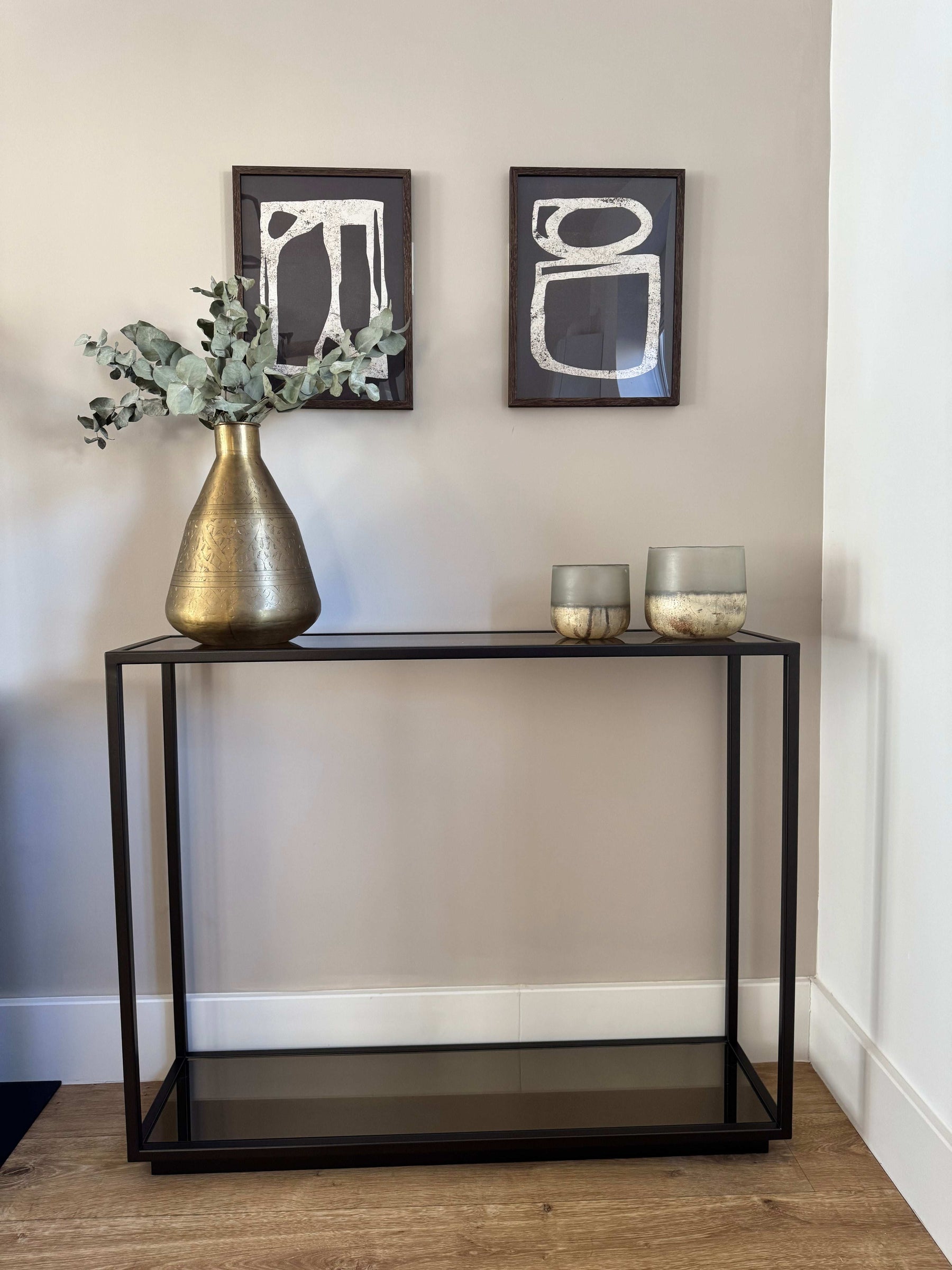
Our Amara Console Table in Dark Bronze works particularly well in living rooms. The bronze finish warms up fabric sofas and wood cabinetry, adding depth to otherwise flat, geometric spaces
7. Mixing Metals Confidently
The old rule demanded matching metals throughout a room. All brass, all chrome, all black. Modern design rejects this rigidity. Thoughtfully mixed metals read as sophisticated rather than confused.
Metal mixing guidelines:
-
Choose a dominant metal (appearing in 60% or more of metal pieces)
-
Add one complementary metal in supporting roles (30% maximum)
-
Use a third metal sparingly in accessories only (10% or less)
-
Maintain consistency within individual pieces (don't mix on single items)
-
Consider undertones (warm metals with warm, cool with cool, or intentional contrast)
Successful combinations:
-
Matte black dominant + dark bronze accents + gold accessories
-
Dark bronze dominant + black accents + brass details
-
Gold dominant + black structure + bronze accessories
Browse our collections to see how different finishes work together. The Avery Collection in black pairs beautifully with pieces from the Madison Collection in dark bronze.
For a focused starting point, compare our black coffee tables, dark bronze coffee tables and gold tables.
8. Small Living Room Solutions
Compact living rooms demand furniture that provides function without consuming precious floor space. Metal and glass furniture excels here because visual lightness creates perceived spaciousness.
Small space strategies:
-
Choose glass tops that allow floor visibility and light passage
-
Select slim frames that don't dominate sightlines
-
Use nesting tables like our Glass Metal Nesting Coffee Tables that expand when needed and contract when not
-
Mount shelves on walls rather than using floor-standing storage
-
Pick round tables that take up less visual space than rectangular alternatives
-
Avoid matching sets that can feel heavy; instead, mix scales thoughtfully
Our Nesting Side Tables exemplify small-space thinking. Two tables nest together, consuming the footprint of one, then separate to serve multiple seating positions when entertaining.
9. Creating Zones Without Walls
Open-plan living requires furniture to define spaces that walls once separated. Without physical boundaries, furniture placement suggests where activities happen.
Zone creation techniques:
-
Position a console table behind a sofa to separate the living from the dining
-
Use rug boundaries to define seating areas, with furniture anchored on the rug
-
Place a bookcase perpendicular to the walls as a partial room divider
-
Arrange seating to face inward, creating contained conversation areas
-
Use lighting changes to signal zone transitions
-
Position plants as natural boundaries between areas
Metal furniture works particularly well for zone definition because its visual lightness doesn't block sightlines entirely. A glass metal console table separates spaces whilst maintaining the open feel of open-plan living.
10. The Entertainment Unit Approach
Television placement shapes modern living room layouts. Whether you embrace the screen or attempt to minimise its presence, the furniture supporting it matters.
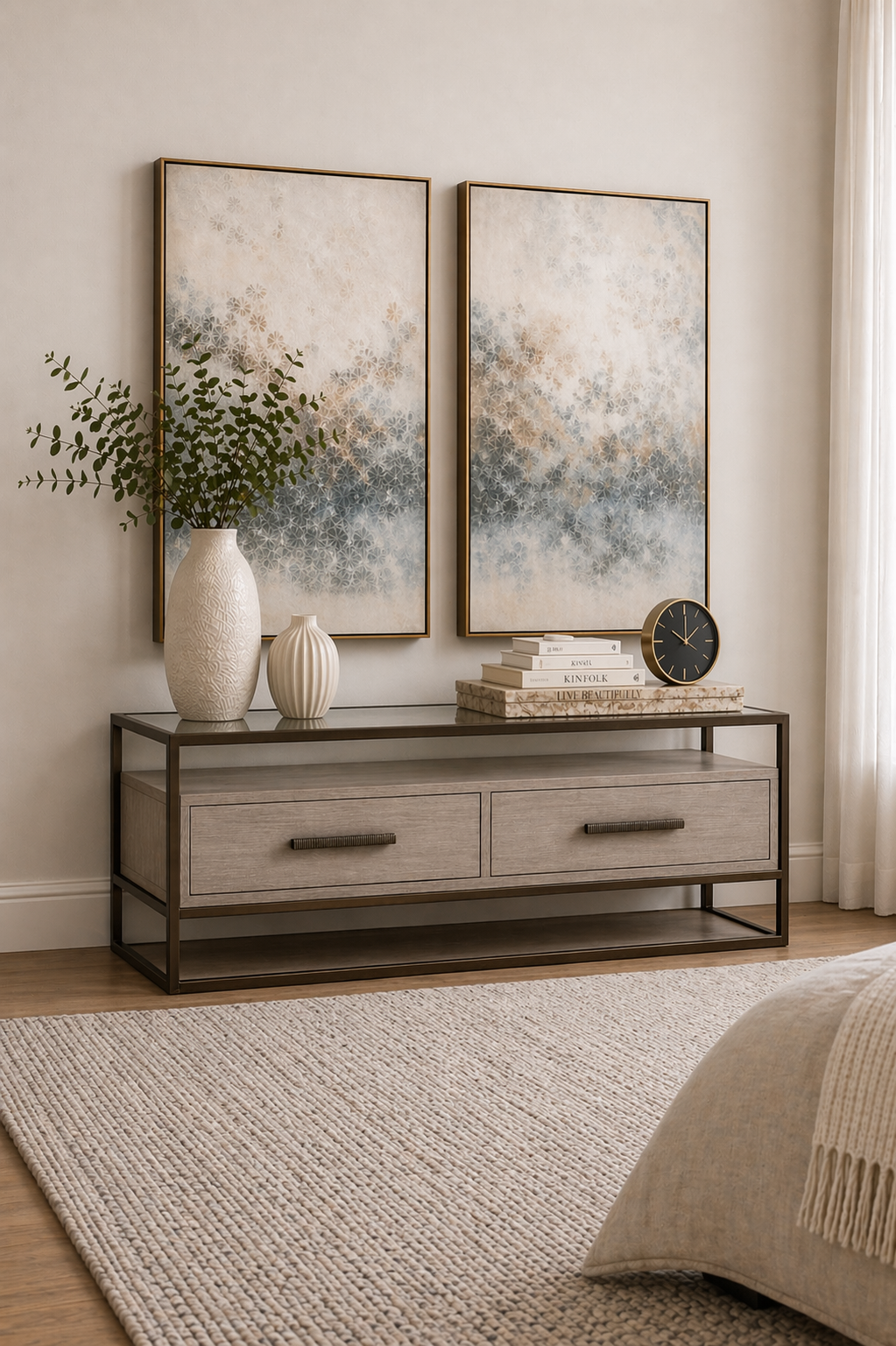
Our TV and media unit collection provides options from minimal to substantial. The Glass Metal TV Unit holds screens whilst remaining visually light. The Harrington TV Unit adds storage without bulk.
Entertainment area considerations:
-
Screen height should place the middle of the display at seated eye level
-
Cable management prevents visual chaos beneath and behind units
-
Component storage for gaming consoles, streaming devices, and sound systems
-
Ventilation to prevent overheating of electronics
-
Viewing distance affects comfortable screen size (and furniture arrangement)
11. Symmetrical Versus Asymmetrical Arrangements
Living room furniture arrangement falls into two camps. Symmetrical layouts place matching pieces on either side of focal points. Asymmetrical layouts balance visual weight without mirroring.
Symmetrical approach:
-
Matching side tables flanking a sofa
-
Identical lamps on matching tables
-
Pairs of chairs facing each other
-
Centred coffee table with balanced accessories
This approach suits formal spaces and those who find visual balance calming. It photographs well and feels intentionally designed.
Asymmetrical approach:
-
Different side tables of similar visual weight
-
Varied lamp styles that share colour or material
-
Mixed seating types arranged for conversation
-
Off-centre styling that creates movement
This approach feels more relaxed and collected over time rather than purchased as a set. It suits those who prefer individuality to perfection.
Neither approach is superior. Choose based on your personality and the room's purpose.
12. Lighting Integration
Furniture provides platforms for lighting. The lamps on your side tables and console tables create an atmosphere that overhead fixtures cannot achieve.
Lighting placement principles:
-
Lamps on side tables create intimate pools of light for reading and conversation
-
Console table lamps provide ambient illumination and visual anchoring
-
Floor lamps beside furniture fill dark corners and add height and variety
-
Candles on coffee tables introduce warmth and movement for an evening atmosphere
Metal furniture interacts beautifully with light. Glass tops reflect and multiply illumination. Dark frames absorb harsh glare whilst catching subtle glow. The materials enhance rather than simply hold lighting.
13. Seasonal Refresh Strategies
Living rooms benefit from seasonal adjustment. Rather than replacing furniture, refresh styling and accessories to reflect changing light and weather.
Seasonal styling ideas:
Spring: Lighter accessories, fresh flowers, cleaner surfaces, brighter colours
Summer: Minimal styling, maximum breathing room, natural materials, green plants
Autumn: Warmer textures, candles, richer colours, layered accessories
Winter: Cosy additions, ambient lighting, festive touches (if desired), warmth emphasis
Your metal furniture remains constant whilst styling evolves. A coffee table that holds spring flowers holds autumn candles, holds winter greenery. The bones stay; the dressing changes.
14. Budget-Conscious Approaches
Transforming a living room doesn't require replacing everything simultaneously. Strategic investment in key pieces creates maximum impact.
Highest impact investments:
-
Coffee table (the visual anchor, seen constantly)
-
One statement console table (provides display and storage)
-
Quality side table for your primary seating position
Subsequent additions:
-
Additional side tables, as budget allows
-
Decorative accessories for purchased surfaces
-
Lighting to complete furniture arrangements
-
Storage pieces for specific needs
Our pricing ranges from accessible side tables to investment marble pieces. Building a collection over time often proves more satisfying than furnishing in a single purchase.